Sustainable inland waterway shipping: Reduced CO2 Emissions due to the innovative tanker ‘Monomera’
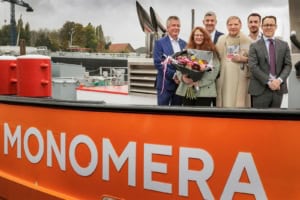
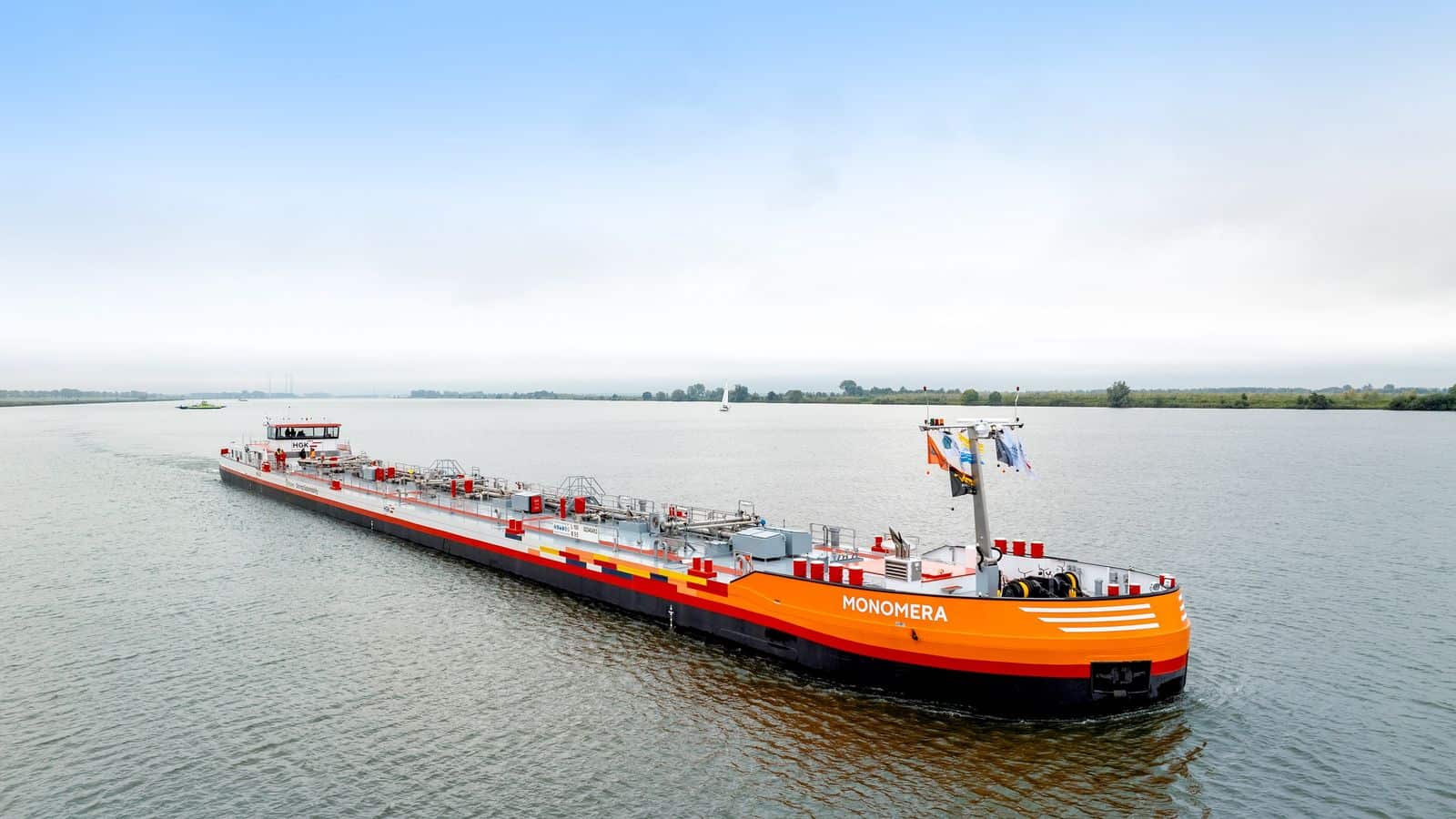
The naming ceremony of the innovative tanker ‘TMS Monomera’ marks another milestone for sustainable inland shipping. The modern, diesel-electric powered vessel was officially put in service on October 30 in Druten, the Netherlands. Developed jointly by our long-standing partner HGK/Wijgula, the tanker will transport caustic soda/sodium hydroxide (?) between the western German canal system and the ARA ports, as well as to our neighboring customers, for the next 10 years.
The ‘Monomera’ is characterized by sustainable technologies and optimized energy efficiency. Compared to other modes of transport, such as trucks or trains, inland waterway ships can transport a larger amount of cargo with less energy consumption. This results in a significant reduction in CO2 emissions. With its “future-fuel-ready” technology, it is already prepared for the use of climate-neutral energy sources.
The vessel has a maximum payload capacity of more than 1,800 tons and is equipped with an intelligent energy management system that enables particularly low-emission operation. By using the latest methods in fluid mechanics, water resistance is minimized, further enhancing energy efficiency.
“We will not be spared from the effects of climate change and must prepare for increasing and longer periods of low water to ensure the transport of our products via waterways. With an optimized draught of just 1.20 meters, the modern tanker can transport up to 348 tons even at low water levels,” says Martin Peters, Supply Chain Manager Europe, Orbia Polymer Solutions (Vestolit).
Dr Gerd Wollermann, Managing Director of Vestolit GmbH, emphasizes: “With the ‘Monomera’, we are making a clear statement for the future. Inland waterway shipping plays an important role for Orbia Vestolit. In recent years, there has been a growing awareness of the need for sustainable transport solutions, and inland waterway shipping offers numerous advantages that contribute to reducing CO2 emissions and promoting environmentally friendly practices.”